
Most people think of dinosaurs as killing machines. Teeth, claws, destruction — that’s the image that sells movie tickets. But one dinosaur spent 76 million years proving that the most effective survival strategy wasn’t aggression. It was showing up for your kids.
Meet Maiasaura peeblesorum — the “good mother lizard.” No fearsome teeth. No armored skull. Just a hadrosaur with a parenting instinct that genuinely shocked the scientific community when evidence of it surfaced in the 1970s.
The Montana Discovery That Changed Paleontology
Jack Horner wasn’t expecting to rewrite dinosaur history when he started digging in Montana’s Two Medicine Formation. He was expecting fossils. What he found instead was an entire nesting colony — dozens of sites packed together, filled with eggs, hatchlings, and juvenile bones.
Before this, the working assumption was straightforward: dinosaurs laid eggs, left, and nature took over from there. The same way sea turtles do today. Logical, simple, widely accepted.
Maiasaura peeblesorum made a mess of that theory. The hatchling bones found in the nests showed wear patterns that only develop over weeks of sustained growth — meaning these babies weren’t hatching and immediately leaving. They were staying put, being fed, being looked after.
That’s not reptile behavior. That’s something closer to what we see in birds — which, not coincidentally, are the dinosaurs that never actually went extinct.
What This Dinosaur Actually Looked Like
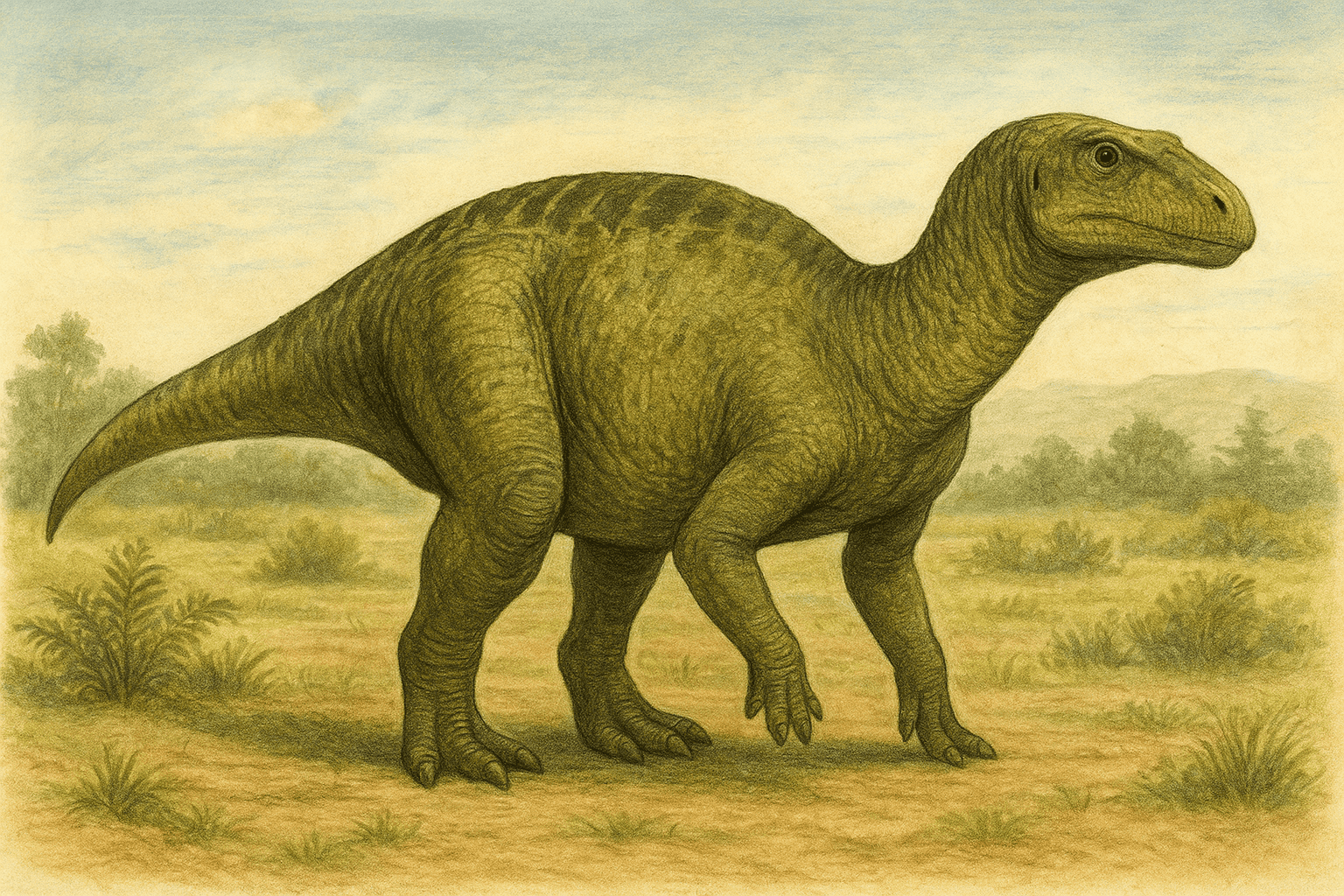
Maiasaura was big. Adults reached about 30 feet long and weighed up to three tons — roughly the size of a modern city bus, though considerably less rectangular.
It belonged to the hadrosaur family, the duck-billed dinosaurs, with a wide flat snout built for cropping vegetation and a jaw lined with hundreds of tightly packed teeth that worked like a biological food processor. It moved on four legs most of the time but could shift to two when it needed speed or reach.
Nothing about its anatomy screams apex predator. And that’s exactly the point — Maiasaura didn’t survive by being the most dangerous thing around. It survived by being smart about how it raised its young, which, from an evolutionary standpoint, is arguably more impressive.
Why Nesting in Colonies Was Brilliant, Not Accidental
Picture a neighborhood where every family on the block is watching out for every kid — not just their own. That’s roughly what a Maiasaura nesting colony looked like, scaled up to hundreds of multi-ton dinosaurs.
Nests were about six feet wide, built from vegetation and soil to insulate the eggs, each holding 30 to 40 eggs in a circular arrangement. And critically, these nests weren’t scattered randomly. They were grouped together, deliberately, season after season, at the same sites.
More adults meant more eyes. More warning calls when something moved at the tree line. More bodies to form a barrier around hatchlings that couldn’t yet walk properly.
In a landscape where Ceratosaurus and its relatives had spent millions of years getting very good at hunting, that kind of collective defense wasn’t just helpful — it was the difference between a species that survived and one that didn’t.
The Fast-Growth Factor Nobody Talks About Enough
Here’s something that gets glossed over in most Maiasaura coverage: these animals grew fast. Bone tissue analysis shows they reached near-adult size within just a few years of hatching.
That’s not normal for a large animal. It suggests a warm-blooded metabolism — one capable of sustaining rapid development — and it almost certainly evolved as a direct response to predation pressure. The longer a juvenile stayed small and vulnerable, the worse its odds. So Maiasaura’s biology essentially fast-tracked its young through the danger window.
Pair that rapid growth with attentive parental care and colonial nesting, and you have a genuinely sophisticated survival system — one that worked for millions of years.
What Maiasaura Still Teaches Us
The dinosaur Maiasaura didn’t just add a new species to the fossil record. It forced a complete rethink of dinosaur behavior — and honestly, our assumptions about intelligence and instinct in prehistoric animals in general.
What the evidence actually supports:
- Colonial nesting required memory, coordination, and repeated decision-making — not instinct alone
- Extended parental care mirrors modern bird behavior, strengthening the dinosaur-bird evolutionary link
- Rapid juvenile growth points to warm-blooded physiology, not the cold, slow metabolism once assumed
- Herd living suggests communication sophisticated enough to coordinate group defense
In 1985, a fragment of Maiasaura peeblesorum bone flew aboard a NASA Space Shuttle mission — the first dinosaur in space. It’s a quirky footnote, but a fitting one for a species that kept surprising us.
The Bottom Line
Maiasaura peeblesorum survived a world full of things trying to eat it — not by becoming more dangerous, but by becoming more organized, more social, and more invested in its young.
That’s worth sitting with. In paleontology, we spend a lot of time talking about the predators. But the species that actually endured, adapted, and shaped the evolutionary line that eventually became modern birds? It looked a lot more like Maiasaura than Ceratosaurus.
Sometimes the most effective strategy isn’t the loudest one.